
Three systems tell you where you are. Dizziness is what happens when they disagree.
Your balance runs on three inputs: the vestibular organs in your inner ear, which sense head position and motion; your eyes; and the position sense coming from your joints, especially the neck and feet. Your brain compares all three constantly. When they agree, you never think about it. When one starts sending a signal that does not match the others, the brain has to pick a side, and the result is the spin, the sway, or the lightheaded moment.
The pattern usually points to the source. Short, violent spinning triggered by rolling over in bed, tipping your head back, or bending down is the signature of BPPV, where displaced crystals in one of the inner ear canals move fluid they were never meant to move. Severe constant vertigo that came on over hours, often after an illness, and then slowly eased over days looks like vestibular neuritis, where the balance nerve was inflamed and the brain is now compensating. Episodes lasting hours with ear fullness, ringing, or changing hearing point toward Meniere's disease. Dizziness that lingers after a concussion tends to show up with quick head turns, screens, supermarket aisles, and anywhere with a lot of visual information. And a stiff, irritated upper neck can contribute a vague unsteadiness of its own.
This page is about the symptom, what sets it off, and what we test. If you want the treatment side, the mechanics of what vestibular rehab actually involves, read our vestibular therapy page.
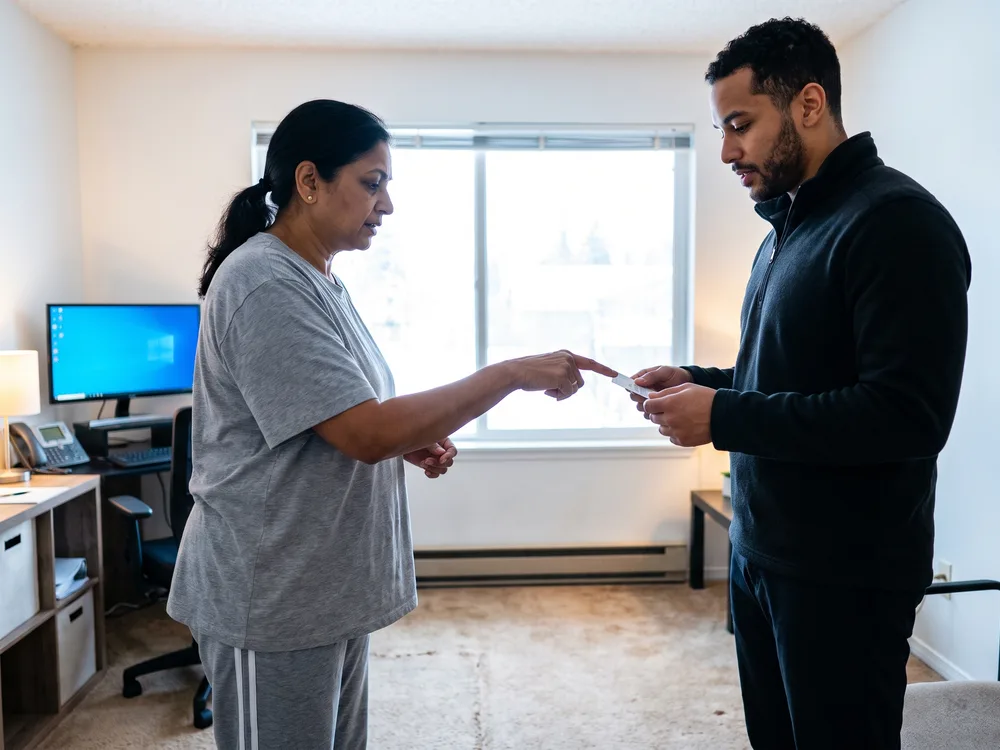
What it feels like, and what sets it off.
Bring us the details. How long an episode lasts, what position you were in when it started, and whether the room spins or you sway are the three things that narrow the list fastest.
The Room Spins In Bed
Rolling over, lying down, or sitting up sets off a hard spin that lasts under a minute and then settles. Position triggers it, and position is the clue.
Off Balance On Your Feet
Drifting toward walls, widening your stance without meaning to, or holding the rail on stairs you used to take two at a time.
Vision Blurs On Quick Turns
Checking a mirror or turning to someone speaking makes the world smear for a moment before it catches up. That is the reflex that keeps your eyes steady, not working.
Nausea With Head Movement
The queasiness that rides along with the spin, and lingers well after it stops. It is a normal consequence of a vestibular mismatch, not a stomach problem.
Busy Places Set It Off
Grocery aisles, crowds, scrolling, driving at night. Too much visual information for a system that is currently leaning on the eyes to stay upright.
Ear Fullness Or Ringing
Pressure, ringing, or hearing that changes with an episode. This one matters, and it may point somewhere other than physical therapy. Tell us.
First we find out which system is lying to you.
The evaluation is a full one-on-one with a Doctor of Physical Therapy, and most of it is testing. We take a careful history of the episodes, then we watch your eyes, because involuntary eye movement is the most direct window into what the inner ear is doing. We use positional testing to check the canals, we test whether your eyes can hold a target while your head moves, and we screen your balance with vision taken away and with the surface changed. We also assess your neck, since a stiff upper cervical spine can add to the unsteadiness.
What happens next depends entirely on what those tests show. Repositioning manoeuvres for positional vertigo. Gaze stabilisation and graded head movement when the system needs to recalibrate. Progressive balance work. Hands-on treatment for the neck where it is contributing. This is where the two pages meet: vestibular therapy is the treatment itself, described in detail. And to be straight with you, some causes of dizziness are not ours. If your history or exam points toward your ear, your heart, your medications, or something neurological, we will tell you plainly and help you get to the right person.
No referral needed. Texas direct access lets us treat you for up to 30 consecutive business days without one.
What our patients say.
"I’ve been extremely impressed with everyone at Complete Athlete Performance Therapy."Lex G. · Google Review
Schedule an Appointment
No referral needed under Texas direct access, up to 30 consecutive business days.
Your first visit is a full one-on-one evaluation with a Doctor of Physical Therapy. Tell us what happens, when it happens, and how long it lasts. You leave knowing what we found.
You’re all set.
We’ll reach out within one business day to confirm your appointment. If you need to speak with us sooner, call us directly.