
We treat the balance system, not the complaint.
Vestibular therapy is what happens in the room. Depending on what the exam finds, that can mean canalith repositioning maneuvers to move displaced crystals out of the canal they do not belong in, gaze stabilization drills that retrain your eyes to hold a target while your head moves, habituation work that safely provokes the symptom in small doses until your brain stops overreacting to it, and balance retraining on progressively less forgiving surfaces.
Testing comes first, because the treatment is different for each cause. We look at your eye movement, what happens when we change your head position, how steady your gaze is, and how you hold a stance and a walking pattern with your senses taken away one at a time. If you would rather start from what this feels like instead of what we do about it, read our page on dizziness and vertigo first, then come back here.
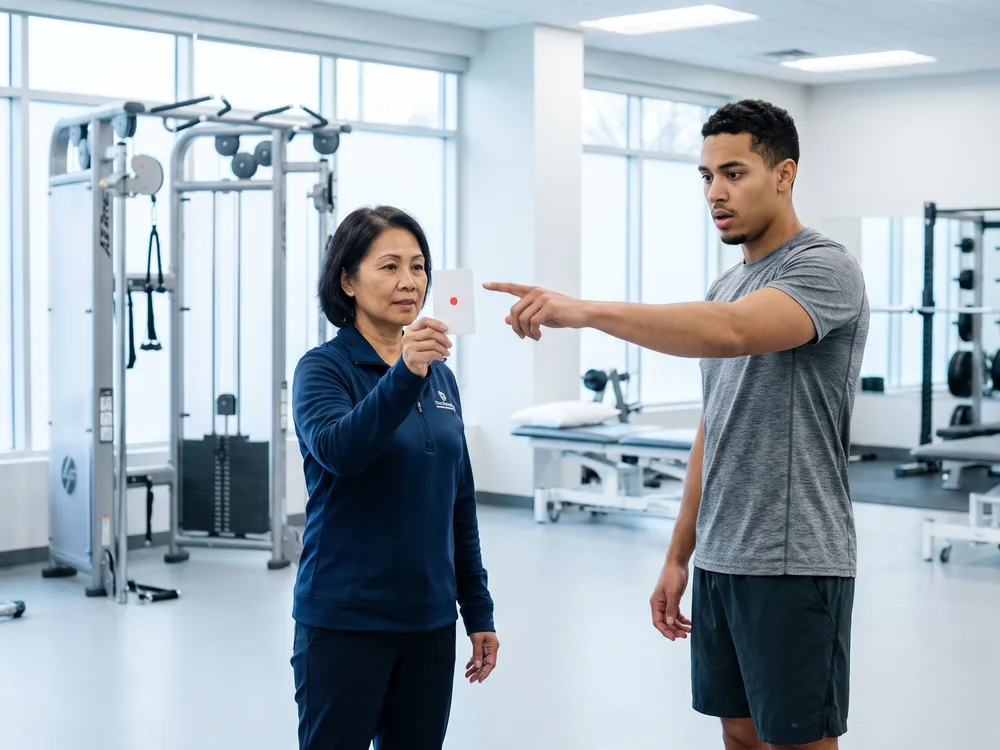
What actually happens in the room.
Bring someone who can drive you home to the first visit. Some of this testing provokes symptoms on purpose, and we would rather you not be behind the wheel afterwards.
Test First
We move your head and body into the positions that set it off and watch your eyes, because your eyes tell us which canal or which side is misreporting. We check gaze stability, standing balance with your senses removed one at a time, and your neck, since the neck can drive dizziness of its own.
Treat In The Room
If the exam points to loose crystals, we run the repositioning maneuver that matches the canal involved and retest to confirm it cleared. If the cause is a nerve, a concussion, or a system that has stopped compensating, we start gaze stabilization and graded habituation instead. Hands-on work goes to the neck when the neck is part of it.
Retrain The System
You leave with specific drills, specific doses, and rules for what to do if it flares. Then we make it harder on purpose: eyes moving, head turning, floor less stable, environment busier, until driving, the grocery aisle, the gym, and the stairs stop being events.
The people you will be working with.
“I’ve been extremely impressed with everyone at Complete Athlete Performance Therapy.”Lex G. · Google review
Stop planning your day around your head.
Dizziness is one of the things people put up with the longest, and one of the things that can change fastest once it is tested properly. Start with a full one-on-one evaluation with a Doctor of Physical Therapy. No referral needed under Texas direct access.
Tell us when it happens and what you were doing when it started. Arrange a ride for the first visit if you can.
You’re all set.
We’ll reach out within one business day to confirm your appointment. If you need to speak with us sooner, call us directly.