
Light weight, hard work.
Blood flow restriction training uses a cuff placed high on the arm or the leg and inflated to a set pressure. Flow into the limb is reduced and return out of it is limited, so the working muscle runs short on oxygen quickly and metabolic byproducts build up instead of washing away. Under those conditions a very light load produces the fatigue and the recruitment that normally take heavy weight to reach.
That matters for one reason. After surgery, with an arthritic joint, or in the early weeks after an injury, heavy loading is the exact thing the tissue cannot take. BFR gives us a way to keep training the muscle while the structure underneath is still healing, instead of waiting it out and losing ground you then have to win back.
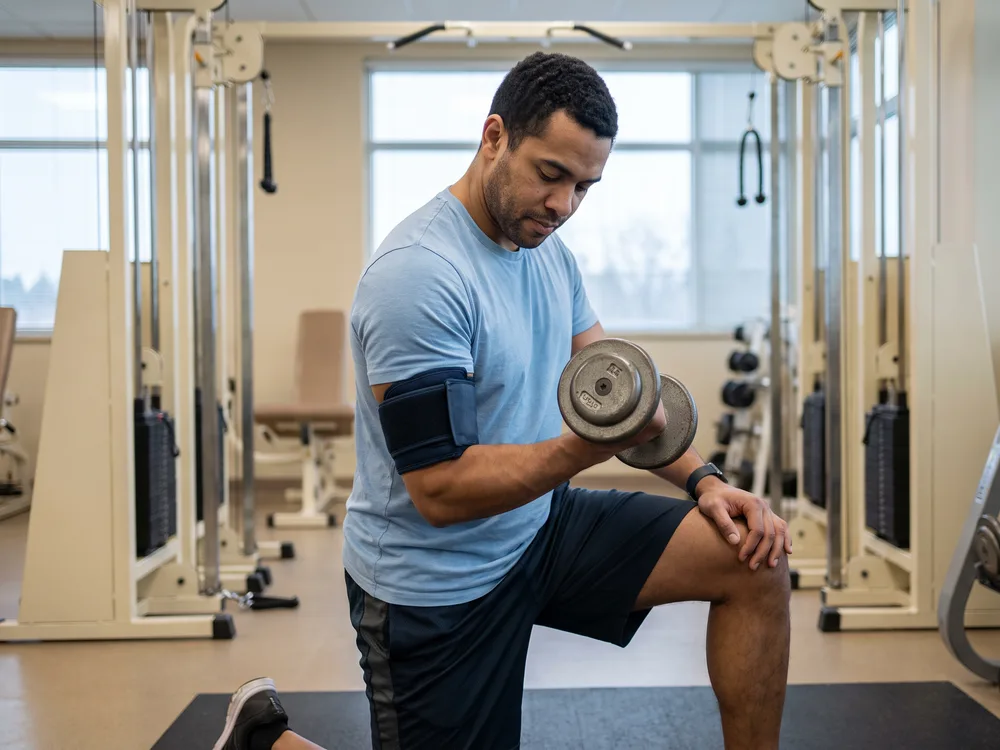
Screened, measured, then trained.
Screening and Limb Measurement
Before anything gets inflated we go through your medical history, because BFR is not right for every patient. Then we measure the pressure at which flow in your limb is reduced, so the cuff is set to you and not to a default number.
Low-Load Sets
You train with light resistance in a set pattern of reps and short rests, cuff inflated the whole time. It burns, and the burn is the point. Your therapist is with you for every set, watching how the limb and your symptoms respond.
Deflate, Reassess, Progress
The cuff comes off and we check what changed. Load, reps, pressure or all three get adjusted for next time, always moving toward the day the cuff is no longer part of the plan.
What our patients say.
“Dr.Jacob helped me through my shoulder pain and pushed me through my first powerlifting season.”Justis R. · Google Review
Schedule an Appointment
No referral needed. Texas direct access lets you be treated for up to 30 consecutive business days without one.
Your first visit is a full one-on-one evaluation with a Doctor of Physical Therapy. Bring your surgical history and your goal, and leave with a plan.
You’re all set.
We’ll reach out within one business day to confirm your appointment. If you need to speak with us sooner, call us directly.