
Tension plus movement, not just rubbing.
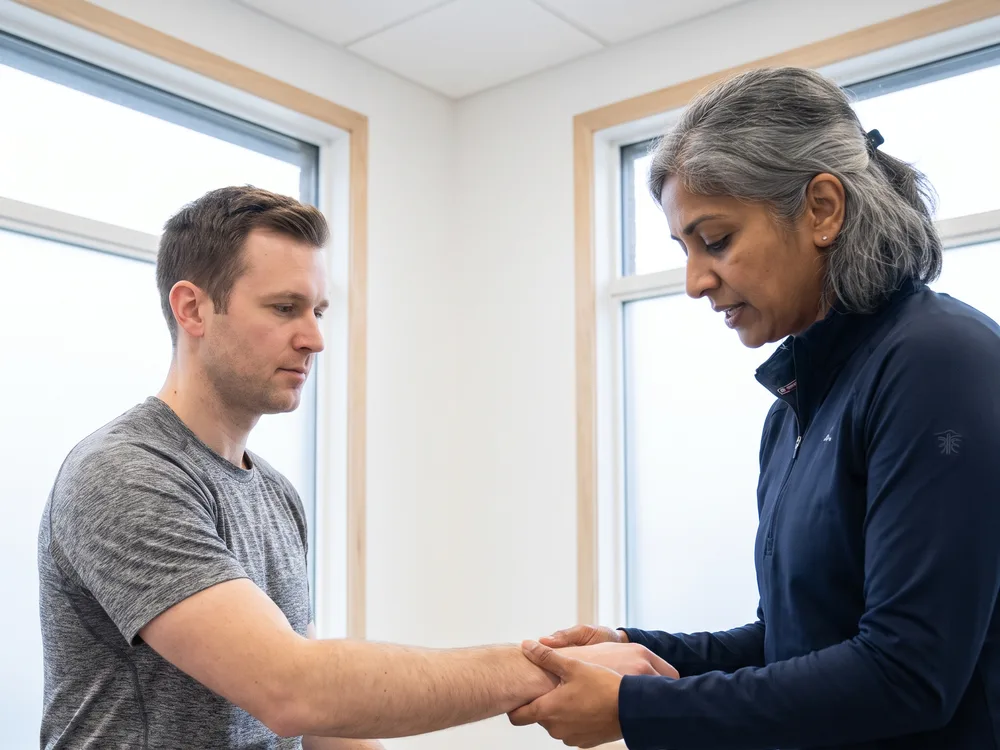
Active Release Technique follows a specific rule. Your therapist finds the restricted tissue by feel, applies precise tension to that exact spot, and then you move the limb through its range while the tension is held. The tissue gets treated while it is doing its job, lengthening and gliding, which is where the restriction actually shows up.
Here is what it is aimed at. Tissue that has been overused, strained, or repaired after an injury lays down scar tissue and adhesions. Layers that are supposed to slide over each other start to stick together. That is what limits motion, what makes a muscle feel permanently tight no matter how much you stretch it, and what can crowd a nerve running between the layers. ART goes after those stuck points one at a time.
Find it, hold it, move it.
Locate the Restriction
Your therapist works through the region by hand, layer by layer, feeling for the texture change that marks an adhesion. Movement and strength testing confirm whether that spot is the one actually limiting you, or just the one that is sore.
Tension and Active Motion
Contact goes on the restriction and stays there while you take the limb through its range. Expect a specific pulling sensation right where the tissue is stuck. Strong but tolerable is the target, and we adjust to keep it there.
Load the New Range
Range you do not use is range that closes back up. Before you leave, you load the tissue in the range you just got back, so your nervous system has a reason to keep it.
What our patients say.
“Andrew and the team were amazing I walked in with really bad shoulder and trap pain on a random night and they welcomed me in, they have made my life 10 times better I’ve never felt so good about.”Carlos C. · Google Review
Schedule an Appointment
No referral needed. Texas direct access lets you be treated for up to 30 consecutive business days without one.
Your first visit is a full one-on-one evaluation with a Doctor of Physical Therapy. Show us what will not move, and leave with a plan.
You’re all set.
We’ll reach out within one business day to confirm your appointment. If you need to speak with us sooner, call us directly.